Thanks for visiting. You are dearly welcome

7 Nigerian Historical Facts That Sound Fake But Are Actually True 🇳🇬

Image
7 Nigerian Historical Facts That Sound Fake But Are Actually True 🇳🇬 7 Nigerian Historical Facts That Sound Fake But Are Actually True 🇳🇬 Introduction Nigeria has one of Africa's richest and most fascinating histories. From powerful ancient kingdoms and colonial rule to independence, military governments and the birth of the modern Nigerian state, the country's past is filled with stories that can sometimes sound unbelievable. Some historical facts are so surprising that you might think they are myths—until you check the records. For today's World Best Historical Events history series, here are 7 Nigerian historical facts that sound fake but are actually true. 1. Nigeria Was Not Always One Country Today, Nigeria is one country made up of 36 states and the Federal Capital Territory. But the political entity known as Nigeria was created through colonial administrative changes. In January 1914, Britain's colonial administration amalgamated the Northern and Southern Pr...

Surviving prisoners from Andersonville prison camp, America's death camp, 1864-1865


Surviving prisoners from Andersonville prison camp, America's death camp, 1864-1865


Andersonville also known as Sumter's camp was a Confederate-run concentration camp during the American Civil War. It was in operation for the last 14 months of the civil war. Andersonville held approximately 45,000, and 13,000 died due to their internment in Andersonville. 

Andersonville had several problems which led to high death rates. It is easier to compile them into a list.

1. The water supply was heavily contaminated. Andersonville had one tiny river flowing through it, in which Confederate soldiers would dump faeces and urine upstream so it would spread disease in the camp. 

2. Diseases such as scurvy, diarrhoea, and dysentery were widespread. Parasites such as hookworms were common too. Many prisoners died from disease as there was very little hygiene being practised. 

3. The defences around the camp were tough to escape from. A high 19-foot stockade made it difficult for anyone to climb out of the centre. Guards from platforms called pigeon roosts shot anyone they saw trying to escape. 

4. Food quality was very poor at the camp. Cannibalism was common, and any food with good nutritional value was rare. 

5. Social structure played a vital role. Prisoners often found themselves in groups. Each of these groups played a different role in the prison hierarchy. Examples of these groups were the Anderson Raiders and the Regulators. The raiders would raid other groups and steal food, supplies, and clothes. The regulators were set up to combat the raiders and even held court sessions, in which six raiders were hanged by prisoners for their crimes toward other inmates.

6. The prisoners were given no clothes, and this left inmates in their uniforms, which became tattered as the months went on and exposed the inmates to the elements. 

The union also had prison camps that saw similar conditions. Both sides treated prisoners terribly on different occasions. 

Comments

Check out our popular viral post

She Suspiciously Paid For Everything In Cash For Years, Then People Realized Why.

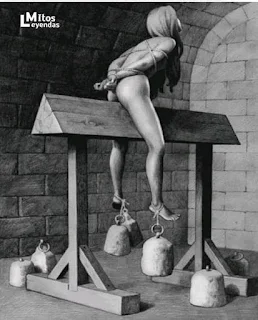
"Wooden Horse or Spanish Donkey"

SHAME AND DISGRACE! THIS IS A UNACCEPTABLE IN OUR LAND