Thanks for visiting. You are dearly welcome

7 Nigerian Historical Facts That Sound Fake But Are Actually True 🇳🇬

Image
7 Nigerian Historical Facts That Sound Fake But Are Actually True 🇳🇬 7 Nigerian Historical Facts That Sound Fake But Are Actually True 🇳🇬 Introduction Nigeria has one of Africa's richest and most fascinating histories. From powerful ancient kingdoms and colonial rule to independence, military governments and the birth of the modern Nigerian state, the country's past is filled with stories that can sometimes sound unbelievable. Some historical facts are so surprising that you might think they are myths—until you check the records. For today's World Best Historical Events history series, here are 7 Nigerian historical facts that sound fake but are actually true. 1. Nigeria Was Not Always One Country Today, Nigeria is one country made up of 36 states and the Federal Capital Territory. But the political entity known as Nigeria was created through colonial administrative changes. In January 1914, Britain's colonial administration amalgamated the Northern and Southern Pr...

Painting depicting New Zealand troops climbing the walls of Le Quesnoy during the Battle of the Sambre, November 4, 1918.

Painting depicting New Zealand troops climbing the walls of Le Quesnoy during the Battle of the Sambre, November 4, 1918.


Today 105 years ago, on November 4, 1918, the Battle of the Sambre was fought as part of the Hundred Days Offensive. 


On the Western Front, after relentless assaults in the Hundred Days Offensive, the German resistance was weakening, and another Allied assault was planned along a 48 km front, from the Sambre Canal in the north to the town of Guise in the south.


In conjunction with the U.S. breakthrough in the Argonne forest, the British would cross the Sambre Canal and New Zealand troops would capture the fortified town of Le Quesnoy and the Mormal Forest. Further south, the French would attack at Guise.


For this attack, the Allies had assembled 16 British and 11 French Divisions, as well as the New Zealand Division. Over 1,000 artillery guns and 37 tanks were also provided for the assault.


At 5:30 AM on November 4, 1918, following a hurricane bombardment, the Allies attacked on the Sambre Canal, at Le Quesnoy and at Guise. The British on the Sambre Canal met fierce resistance from the Germans, who enjoyed the 21 m wide canal as part of their defense. The British suffered many casualties trying to cross the canal and establish bridges, and it was only at 12 AM that a 3 km breach was achieved.


Le Quesnoy was a fortified town with 9 meter walls as ramparts, having been in German possession since August 1914. The New Zealanders planned to surround the town and move into it afterwards. By 10 AM, the New Zealanders had surrounded the town, advancing 1.6 km. The troops attempted to move into Le Quesnoy, but the German garrison of 1,500 men put up fierce resistance with machine-guns.


Only several hours later did the New Zealanders manage to capture Le Quesnoy, when an unmanned section of the ramparts was spotted and exploited. The French attack at Guise was successful, as they captured it and advanced. 


Comments

Check out our popular viral post

She Suspiciously Paid For Everything In Cash For Years, Then People Realized Why.

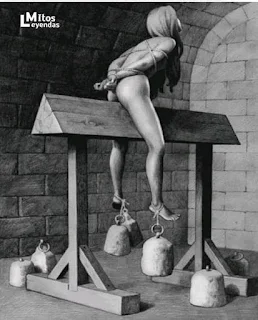
"Wooden Horse or Spanish Donkey"

SHAME AND DISGRACE! THIS IS A UNACCEPTABLE IN OUR LAND