Thanks for visiting. You are dearly welcome

7 Nigerian Historical Facts That Sound Fake But Are Actually True 🇳🇬

Image
7 Nigerian Historical Facts That Sound Fake But Are Actually True 🇳🇬 7 Nigerian Historical Facts That Sound Fake But Are Actually True 🇳🇬 Introduction Nigeria has one of Africa's richest and most fascinating histories. From powerful ancient kingdoms and colonial rule to independence, military governments and the birth of the modern Nigerian state, the country's past is filled with stories that can sometimes sound unbelievable. Some historical facts are so surprising that you might think they are myths—until you check the records. For today's World Best Historical Events history series, here are 7 Nigerian historical facts that sound fake but are actually true. 1. Nigeria Was Not Always One Country Today, Nigeria is one country made up of 36 states and the Federal Capital Territory. But the political entity known as Nigeria was created through colonial administrative changes. In January 1914, Britain's colonial administration amalgamated the Northern and Southern Pr...

Clumbus enslaves the Arawak and commits genocide


 Clumbus enslaves the Arawak and commits genocide


Clumbus enslaves the Arawak and commits genocide

Columbus and his men round up Arawak men, women, and children and enclose 550 of them in pens and four caravels bound for the slave market of southern Spain during his second voyage to the New World. Approximately 200 perish during the passage, and their bodies are cast into the sea.

After the survivors are sold as slaves in Spain, Columbus later writes: “Let us in the name of the Holy Trinity go on sending all the slaves that can be sold” (Resendez, 2016). Additionally, while in Haiti, Columbus orders all Natives 14 years or older to collect a certain amount of gold every three months, an impossible task since there is so little gold there.

If Arawak Natives do not collect enough, Columbus has their hands cut off and tortures them. Bartolome de las Casas, a young priest, witnessed many atrocities committed by Spaniards against Native peoples. He later wrote: “I saw here cruelty on a scale no living being has ever seen or expects to see.” Las Casas describes the treatment of Natives thus: “Our work was to exasperate, ravage, kill, mangle and destroy; small wonder, then, if they tried to kill one of us now and then….

The admiral, it is true, was blind as those who came after him, and he was so anxious to please the King that he committed irreparable crimes against the Indians…” (Zinn, 1950).

Las Casas also notes that the Spaniards “thought nothing of knifing Indians by tens and twenties and of cutting slices off them to test the sharpness of their blades.”


Comments

Check out our popular viral post

She Suspiciously Paid For Everything In Cash For Years, Then People Realized Why.

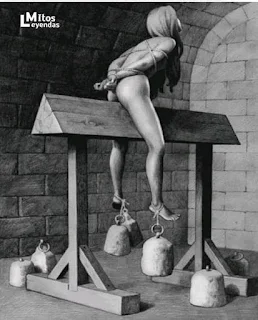
"Wooden Horse or Spanish Donkey"

SHAME AND DISGRACE! THIS IS A UNACCEPTABLE IN OUR LAND