Thanks for visiting. You are dearly welcome

7 Nigerian Historical Facts That Sound Fake But Are Actually True 🇳🇬

Image
7 Nigerian Historical Facts That Sound Fake But Are Actually True 🇳🇬 7 Nigerian Historical Facts That Sound Fake But Are Actually True 🇳🇬 Introduction Nigeria has one of Africa's richest and most fascinating histories. From powerful ancient kingdoms and colonial rule to independence, military governments and the birth of the modern Nigerian state, the country's past is filled with stories that can sometimes sound unbelievable. Some historical facts are so surprising that you might think they are myths—until you check the records. For today's World Best Historical Events history series, here are 7 Nigerian historical facts that sound fake but are actually true. 1. Nigeria Was Not Always One Country Today, Nigeria is one country made up of 36 states and the Federal Capital Territory. But the political entity known as Nigeria was created through colonial administrative changes. In January 1914, Britain's colonial administration amalgamated the Northern and Southern Pr...
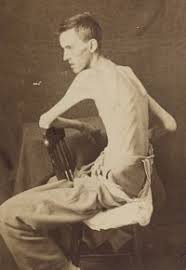
A surviving prisoner from Andersonville prison camp, America's own concentration camp, 1865-1867


A surviving prisoner from Andersonville prison camp, America's own concentration camp, 1865-1867


Andersonville or also known as Sumter's camp, was a confederate run concentration camp during the American Civil war for Union soldiers. It was in operation for the last 14 months of the civil war. Andersonville held approximately 45,000 and 13,000 of those would die as a result of their internment in Andersonville.

Andersonville had several problems which led to high death rates. It is easier to compile them into a list. I will also provide a map of Andersonville so that you can see these features more easily. Here they are:

The water supply was heavily contaminated. Andersonville had one very small river flowing through it, in which confederate soldiers would dump faeces and urine upstream so it would spread disease in the camp.

2. Diseases such as scurvy, diarrhoea and dysentery were very common. Parasites such as hookworm were common too. Many prisoners died from disease as there was very little hygiene being practised.

3. The defences around the camp were very hard to escape from. A high 19 foot stockade made it difficult for anyone to climb out of the camp. Guards from platforms called pigeon roosts shot anyone they saw trying to escape.

4. Food was very poor at the camp. Cannibalism was common and any food with any sort of good nutritional value was rare.

5. Social structure played a vital role. Prisoners often found themselves in groups. Each of these groups played a different role in the prison hierarchy. Examples of these groups were the Anderson Raiders and the Regulators. The raiders would raid other groups and steal food, supplies and clothes. The regulators were set up to combat the raiders and even held court sessions, in which 6 raiders were hanged by prisoners for their crimes towards other inmates.

6. The prisoners were given no clothes, and this left inmates in their uniforms which became tattered as the months went on and exposed the inmates to the elements.


Comments

Check out our popular viral post

She Suspiciously Paid For Everything In Cash For Years, Then People Realized Why.

"Wooden Horse or Spanish Donkey"

SHAME AND DISGRACE! THIS IS A UNACCEPTABLE IN OUR LAND