Thanks for visiting. You are dearly welcome

7 Nigerian Historical Facts That Sound Fake But Are Actually True 🇳🇬

Image
7 Nigerian Historical Facts That Sound Fake But Are Actually True 🇳🇬 7 Nigerian Historical Facts That Sound Fake But Are Actually True 🇳🇬 Introduction Nigeria has one of Africa's richest and most fascinating histories. From powerful ancient kingdoms and colonial rule to independence, military governments and the birth of the modern Nigerian state, the country's past is filled with stories that can sometimes sound unbelievable. Some historical facts are so surprising that you might think they are myths—until you check the records. For today's World Best Historical Events history series, here are 7 Nigerian historical facts that sound fake but are actually true. 1. Nigeria Was Not Always One Country Today, Nigeria is one country made up of 36 states and the Federal Capital Territory. But the political entity known as Nigeria was created through colonial administrative changes. In January 1914, Britain's colonial administration amalgamated the Northern and Southern Pr...

THE GREAT TERRIBLE EXECUTION IN THE HISTORY OF CHINA...

An Execution in China

Arriving to China in the late 1850s, William Saunders was the first photographer in China. He opened his photo studio in Shanghai in January 1862, and his fascination with China led him to document scenes of everyday life which reflected nineteenth century China accurately.

His photos were very popular throughout China, and he contributed regularly to Western publications such as the Far East and the Illustrated London News. One of his most famous photos was that of a public execution during the Second Opium War. The photo, reprinted in many Western newspapers, met his audience’s expectations that the enemy they were fighting was ‘savage’, and justified the British military offensive there.

The Second Opium War (1856-1860) was one of the muddier wars — everyone from Russia to the U.S. was involved in what was primarily a military campaign to guarantee European sovereignty in China, which was already being weakened by the internal Taiping rebellion. In 1860, an Anglo-French army landed in Pei Tang and marched to Beijing.

One of the most dramatic moments of the China War was the execution of Private John Moyse. He refused to kow-tow to his Chinese captors, and was savagely beaten and beheaded in cold blood. When his fellow prisoners were released a week later, the tale of Moyse’s bravery spread and immortalized by Francis Hastings Doyle in the poem, The Private of the Buffs.

The poem sensationalized Moyse as a newly-recruited young Kentish farmboy rather than a veteran middle-aged Irishman that he was and was instrumental in uniting the public opinion in Britain against the Chinese.
Thanks for reading, leave your thought in the comment section below.


Comments

Check out our popular viral post

She Suspiciously Paid For Everything In Cash For Years, Then People Realized Why.

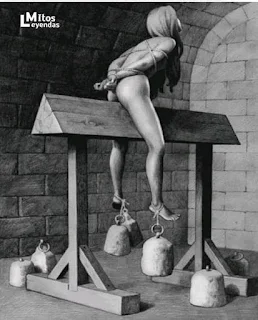
"Wooden Horse or Spanish Donkey"

SHAME AND DISGRACE! THIS IS A UNACCEPTABLE IN OUR LAND