Thanks for visiting. You are dearly welcome

7 Nigerian Historical Facts That Sound Fake But Are Actually True 🇳🇬

Image
7 Nigerian Historical Facts That Sound Fake But Are Actually True 🇳🇬 7 Nigerian Historical Facts That Sound Fake But Are Actually True 🇳🇬 Introduction Nigeria has one of Africa's richest and most fascinating histories. From powerful ancient kingdoms and colonial rule to independence, military governments and the birth of the modern Nigerian state, the country's past is filled with stories that can sometimes sound unbelievable. Some historical facts are so surprising that you might think they are myths—until you check the records. For today's World Best Historical Events history series, here are 7 Nigerian historical facts that sound fake but are actually true. 1. Nigeria Was Not Always One Country Today, Nigeria is one country made up of 36 states and the Federal Capital Territory. But the political entity known as Nigeria was created through colonial administrative changes. In January 1914, Britain's colonial administration amalgamated the Northern and Southern Pr...

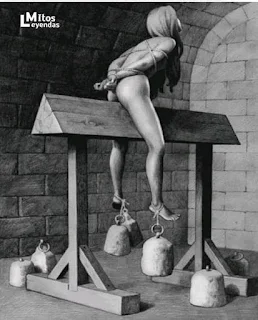
THE BRUTAL COMPLEX PENALTY CALLED "THE FIVE PUNISHMENT" IN CHINA IN THE 19th CENTURY.


THE BRUTAL COMPLEX PENALTY CALLED "THE FIVE PUNISHMENT" IN CHINA IN THE 19th CENTURY.  

 THE BRUTAL COMPLEX PENALTY CALLED "THE FIVE PUNISHMENT" IN CHINA IN THE 19th CENTURY. 

wu xing, was a general term referring to all the main punishments  in ancient Chinese.

In China in the 19th century there was a brutal "complex" penalty called "Five Punishments." The sentenced offender was branded, then his legs and hands were cut off, then beaten with sticks, his head was cut off, and he was put on public display.

“Five penalties”, wu xing, was a general term referring to all the main punishments  in ancient Chinese legal system from the Xia (about 2100 B.C.-1600B.C) to the Qing  Dynasty (1644-1911A.D.).Just as humiliation is a historical-cultural-social construct 

(Lindner,2007),“five penalties” is a psychologicalculturalsocialhistorical format in nature. 

In this paper, we first make a very brief introduction to the nature of xing and  its relations with fa (law), then have a historical glimpse over the inner changes in wu  xing, and analyze it psychologically, culturally, socially and historically

1 Etymological meaning of xing related to fa and lü  Etymologically, xing has the following meanings: 1) killing: “(xing) is used to 

kill the criminals” (in the historical book Yi Meng ); 2) punishment: “ (The ultimate  purpose of) Punishment is just to eliminate itself” (in Shu1 Dayumo); 3) government : “Ministers assist the King to rule the state” (in Zhouli Qiuguan ); 4) model: “A real  benevolent person is tolerant” (in Liji Liyun) ,and 5) law(fa), regulations(lü), torah: 

“Punishments according to the torah varies at different times”(in “Shangshu 

Luxing ”). To sum it up, xing was just fa in the Xia, Shang (about 1066 A.D.-771 A.D.) and  Zhou Dynasties (about 770 A.D.-221 A.D.) before it had the denotation of written laws in the Warring States Period. Generally speaking, xing, fa and lü were  interchangeable though all the codes in ancient China were nominated lü, or xing lü

Thanks for reading, leave your thought in the comment section below.

Comments

Check out our popular viral post

She Suspiciously Paid For Everything In Cash For Years, Then People Realized Why.

"Wooden Horse or Spanish Donkey"

SHAME AND DISGRACE! THIS IS A UNACCEPTABLE IN OUR LAND